

Most business blogs in Saudi Arabia go quiet after a handful of posts. The posts were written, nobody found them, and the owner decided blogging doesn’t work. The problem is usually not the idea of a blog. It is that the posts don’t answer anything people actually search for, and they don’t lead anywhere once someone reads them.
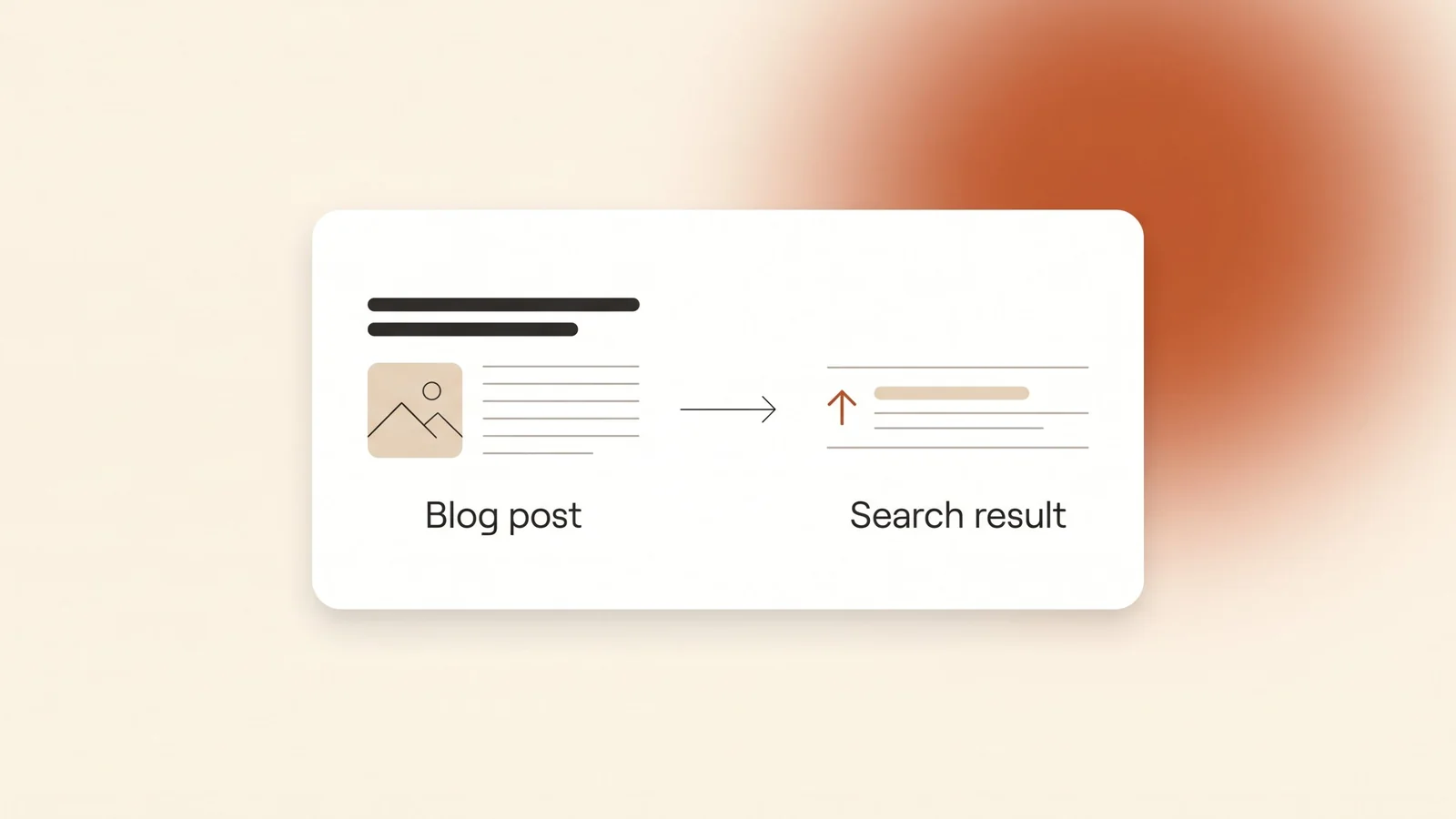
The short answer: Blogging for SEO means publishing articles that answer the questions your customers type into Google, so your site shows up for those searches and readers move on to your service pages. It works when each post targets one real question, answers it fully and early, is written for people rather than for Google, and links to the page where you sell. Results build over months, not weeks.
What is blogging for SEO?
Blogging for SEO is writing articles that rank in Google for searches your future customers make. A service page targets people who are ready to buy, such as “law firm in Jeddah”. A blog post targets the questions people ask before that point, such as “how long does a commercial case take” or “what is a landing page”.
Each post is one more page Google can show. Each one answers one question well. Over time, a blog gives your site many entry points from search, and each entry point can send a reader to the service that solves their problem. If you are new to the wider topic, our guide on what SEO is covers the basics first.
Does a blog actually help a business website rank?
A blog helps when its posts are useful. It does nothing when they are filler. Google’s guide to creating helpful, reliable, people-first content says Google’s ranking systems are designed to show helpful, reliable content created primarily to benefit people, not to manipulate rankings. Google asks site owners to judge their own pages with questions such as whether the content offers original information or analysis, and whether it gives substantial value compared with other pages in the results.
That gives you a simple test before you publish. If your post says the same thing as the ten results already on page one, Google has little reason to show yours. If it answers the question better, with local detail, a clear process or a real example from your field, it has a chance.
A blog also helps beyond Google. A sales team can send a post to a prospect who asks a common question. A clinic can send its post on preparing for a procedure. A good post keeps working long after the day it was published.
How do you choose blog topics?
Start with the questions your customers already ask you. Every call, WhatsApp message and meeting is a list of topics. Write them down for two weeks, in the words customers use, in Arabic and in English.
Then check how people search for those questions:
- Google autocomplete and related searches. Type the start of the question into Google and note what it suggests, in both languages.
- Search Console queries. If your site is already live, the Performance report shows the real searches that already bring you impressions. Our Google Search Console setup guide explains how to read it.
- Keyword research tools. These show roughly how often a phrase is searched and how competitive it is. Our keyword research guide for beginners walks through the full process.
Pick topics that are broad enough for many people to search, and break them down well. A post on “what is a landing page” serves far more readers than a narrow checklist only a specialist would look for. Kyvo Media’s founder, Omar Alghamdi, puts the approach plainly: don’t hold back, give the whole blueprint. Most people hire a specialist because they don’t have time, not because the knowledge is secret.
Each post should target one main question. If two topics need different answers, they need two posts. If two phrases mean the same thing, such as two spellings of the same Arabic term, cover them in one post.
How should a blog post be structured?
A post that ranks and gets read follows a clear order. The reader should get the answer in the first few lines, then the detail. Here is what each part does:
| Part | What it does | How to write it |
|---|---|---|
| Title tag | The clickable headline Google usually shows in results. | The search phrase itself, clear and unique to the page. No hooks or clickbait. |
| Meta description | The short summary that may appear under the title. | One or two sentences on what the post covers, unique to that post. |
| H1 | The visible heading at the top of the post. | Matches the title’s keyword phrase. |
| Opening answer | Answers the question straight away. | Two to four sentences. A reader who stops here should still have the answer. |
| Subheadings | Break the post into the questions readers ask next. | Write them as questions or plain statements, one idea per section. |
| Internal links | Send readers to your service page and related posts. | Descriptive link text, such as “website development”, not “click here”. |
| FAQ | Answers the follow-up questions in short form. | Three to five questions, each answered in the first sentence. |
| Author and date | Shows who wrote it and when. | A real name with a role, and the published date. |
Google’s SEO Starter Guide says a good title is unique to the page, clear and concise, and accurately describes the page.
Google’s SEO Starter Guide also says a good meta description is short, unique to one page and includes its most relevant points. It notes that Google usually builds the snippet from the page content itself, so the opening answer matters as much as the description.
Write in short paragraphs. Use one fact per sentence. Use a table when you compare options, and a numbered list when the order of the steps matters.
How long should a blog post be?
As long as the answer needs, and no longer. Google’s SEO Starter Guide says the length of the content alone doesn’t matter for ranking. Google’s helpful content guide lists writing to a particular word count because you think Google prefers it as a warning sign, and says Google has no preferred word count.
A post on “how to add a WhatsApp button to your website” may need 600 words. A full guide to Google Ads costs may need 2,000. Pad the short one and readers leave. Cut the long one and it misses what they came for. Cover the question completely, then stop.
How do blog posts connect to your service pages?
Through internal links. A blog post that never links to a service page brings visitors who read and leave. Every post should link to the one service page most related to its topic, and to one or two related posts.
Google’s SEO Starter Guide explains that link text, the visible words of a link, tells users and Google something about the page you link to. So link with words that describe the target page. “Our SEO service” is better than “here”. Place the link where it helps the reader, usually where the post mentions the problem the service solves.
Links should also run the other way. When you publish a new post, add a link to it from an older related post. That way Google and readers find the new page sooner.
Should you blog in Arabic, English or both?
Write in the language your customers search in. In Saudi Arabia that is often both, and people search for the same service in different words in each language. A post in Arabic should be written for Arabic searchers, not translated word for word from the English.
If you publish both, give each language its own page. Google’s guide to managing multilingual sites recommends different URLs for each language version, linked with hreflang annotations. It says Google uses the visible content of a page to work out its language, not the lang attribute or the URL. Keep each page in one language, and avoid side-by-side translations on the same page.
Arabic also needs its own keyword check. People may spell the same term in more than one way, and the Arabic phrase may be searched far more or far less than the English one. Our guide to Arabic SEO for Saudi websites covers this in detail.
Can you use AI to write blog posts?
You can use AI tools, but you are responsible for what you publish. Google’s guidance on generative AI content says AI can help with research and with structuring original content, as long as the result meets Google’s Search Essentials and spam policies. It says it is critical to fact-check and review all AI-generated content for accuracy, including titles, descriptions and image alt text.
The risk is volume without value. Google’s spam policies define scaled content abuse as generating many pages mainly to manipulate rankings rather than help users, no matter how the pages are made. One of Google’s examples is using generative AI tools to produce many pages without adding value for users. Another is automated transformations, such as translating other content, that add little value.
In practice, use AI for outlines and first drafts if it helps. Then add what only you know: how the process works in your field, the questions your customers ask, local rules and real costs. Check every fact against its source before you publish.
How often should you publish?
Google’s SEO Starter Guide doesn’t ask for a publishing schedule. It focuses on content quality and on keeping published content current: check old posts, update them when things change, and remove them if they are no longer relevant.
Pick a pace you can keep without dropping quality. One useful post a week is better than five rushed ones. Changing the date on a post without real updates does not make it fresh. Google’s helpful content guide lists that as a warning sign too.
Update the posts that already bring traffic first. A post that ranks on page two can often move up when you add the details it is missing.
How do you measure whether your blog is working?
Measure in three stages, because each one shows up at a different time:
- Indexed. Check in Search Console that Google has indexed each new post. Use the URL Inspection tool on important posts.
- Seen. In the Performance report, filter by the post’s page and watch impressions, clicks and the queries it appears for.
- Useful to the business. Track how many readers go from a post to a service page, and how many contact you. Calls, form submissions and WhatsApp messages matter more than page views.
If a post gets impressions but few clicks, rewrite its title and description to match the query better. If it gets clicks but no one moves on, improve the link to your service page and make it more visible.
What mistakes do business blogs make?
- Writing about the company instead of the customer. News about your office move doesn’t answer anyone’s search.
- Targeting no real search. A post with a creative title nobody types into Google won’t be found.
- Burying the answer. Three paragraphs of introduction before the answer sends readers back to the results.
- Repeating keywords. Google’s SEO Starter Guide says excessive repetition tires readers and that keyword stuffing is against Google’s spam policies.
- No links to service pages. The post brings readers who have nowhere to go next.
- Publishing and forgetting. Old posts with outdated rules or prices hurt trust.
- Giving up too early. A new blog rarely brings visible traffic in its first weeks.
Frequently asked questions
Does a blog help SEO?
Yes, when its posts answer real searches your customers make and link to your service pages. A blog of thin, copied or off-topic posts does not help, because Google’s systems are designed to show content created primarily to benefit people.
How long should a blog post be for SEO?
There is no set length. Google says it has no preferred word count and that length alone doesn’t matter for ranking. Answer the question fully, then stop.
How long does it take for a blog post to rank?
A new post can be indexed and start showing impressions in Search Console within weeks. First movement in organic rankings typically takes 2 to 4 months, because Google needs time to crawl, trust and rank new work.
Can I use AI to write my blog posts?
Yes, if a person checks every fact and adds real value. Google says AI-generated content must meet its spam policies, and that producing many pages with AI without adding value for users may count as scaled content abuse.
Should my blog be in Arabic or English?
Write in the language your customers search in, often both in Saudi Arabia. Give each language its own page, link the pair with hreflang, and write the Arabic for Arabic searchers instead of translating word for word.
The bottom line
A business blog works when every post answers one real question your customers search for, gives the answer early, adds what only you know, and links to the page where you sell. Write for people, check every fact, keep posts up to date, and measure leads, not just visits. Give it months, not weeks.
Kyvo Media plans and writes blog content in Arabic and English as part of our SEO service, and links every post to the pages that bring you enquiries. Book a free audit and we’ll show you which questions your customers are searching for and which posts your site is missing.